

Southeast Asian Transshipment Routes Tighten: Vietnam Places 18 Product Categories Under Enhanced Origin Surveillance; Three Companies Face Criminal Prosecution in S$23 Million False Origin Case

On June 16, 2026, the Vietnam Customs Department issued Official Dispatch No. 17552/CHQ-GSQL, requiring customs offices nationwide to strengthen inspections on the origin, labeling, and illegal transshipment of imported and exported goods.
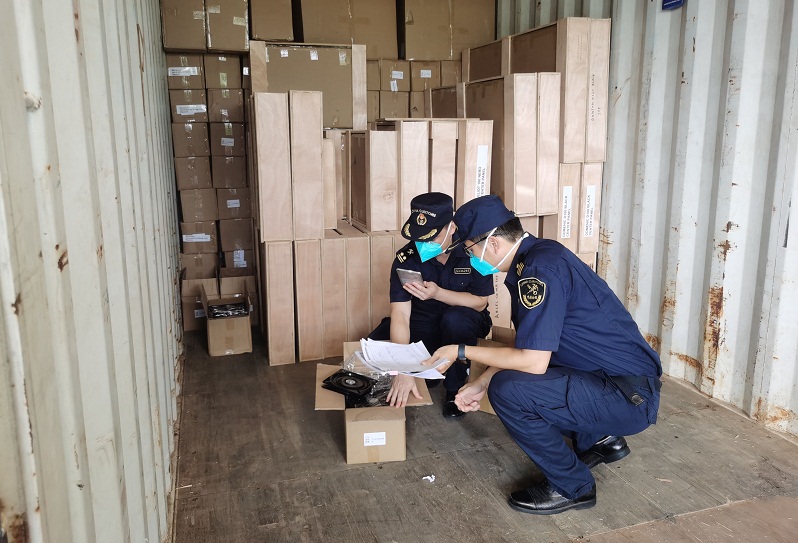
The new directive aims to combat the growing number of cases involving origin fraud, circumvention of trade remedy measures, and illegal transshipment. It also represents a key commitment by Vietnam under its trade arrangements with the United States to avoid the imposition of a proposed 50% punitive tariff.
I. Four Types of Origin Fraud and 18 High-Risk Product Categories
According to the official dispatch, customs authorities will focus on four major forms of origin fraud:
1. Minimal Processing with False "Made in Vietnam" Labeling
Imported parts or semi-finished products undergo only simple assembly or processing without meeting the "substantial transformation" requirement before being exported as products of Vietnamese origin.
2. Fragmented Operations Through Multiple Related Companies
Related companies separately import components, conduct minimal processing, and consolidate the finished products for export in an attempt to conceal the true origin.
3. Fraudulent Certificates of Origin (C/O)
Applicants conceal the actual source of raw materials, overstate the proportion of domestic content, or repeatedly use the same invoices to obtain multiple Certificates of Origin.
4. Misuse of Bonded Warehouses
Goods are repackaged, relabeled, or consolidated within bonded warehouses before being exported or released into the domestic market without customs declaration, constituting origin fraud.
Vietnam Customs has designated 18 categories of high-risk products for enhanced monitoring, including:
- Wood and wood products (plywood, cabinets, chairs)
- Machinery and electrical equipment
- Steel products
- Electric bicycles
- Solar panels
- Tires
- Ceramic tiles
- Footwear
- Handbags
- Food products
- Agricultural products
II. Singapore Files Criminal Charges in S$23 Million "Origin Laundering" Case
On June 11, 2026, the Singapore Customs announced that three local companies and three Singaporean individuals had been charged under the Regulation of Imports and Exports Act and related regulations for allegedly exporting Chinese-made mattresses to the United States while falsely declaring them as Made in Singapore.
The total value of the goods exceeded S$23 million (approximately RMB 120 million), with the alleged offenses spanning from August 2022 to June 2025.
The accused are Loh Yew Hong (68), Leong Yu Fong (41), and Loh Zhen Xing (37), facing charges including false declarations, false statements, and the use of incorrect trade descriptions.
Under Singapore law, first-time offenders may face fines of up to S$100,000 or three times the value of the goods, whichever is higher, as well as imprisonment of up to two years.
Singapore Customs emphasized that fraudulent trade declarations and abuse of Certificates of Origin seriously undermine the credibility of international trade documentation and Singapore's reputation as a trusted global trading hub.
III. Vietnam and the U.S. Launch Real-Time Customs Data Exchange
On June 25, 2026, the Vietnam Customs Department and the U.S. Customs and Border Protection (CBP) signed a Memorandum of Understanding (MoU) during the World Customs Organization (WCO) Council Session in Brussels.
The agreement establishes a real-time electronic cargo manifest data exchange mechanism, designed to facilitate bilateral trade, strengthen supply chain security, and combat customs violations including origin fraud, illegal transshipment, smuggling, and tax evasion.
According to official statistics, Vietnam-U.S. bilateral trade reached US$172.3 billion in 2025, with Vietnam's exports to the United States increasing 28.2% year-on-year to US$153.1 billion. Between January 1 and June 18, 2026, bilateral trade totaled US$89.58 billion, up 23.1% year-on-year.
The implementation of real-time data sharing significantly enhances the U.S. Customs' ability to trace the actual origin of goods exported from Vietnam, leaving considerably less room for origin laundering.
Industry Perspective
The simultaneous tightening of origin enforcement by Vietnam and Singapore signals the beginning of a systemic crackdown on transshipment-based trade arbitrage across Southeast Asia.
Vietnam's latest measures are not temporary administrative actions but binding policy commitments under the U.S.-Vietnam trade framework.
For exporters relying on "light-processing and relabeling" strategies, August and September are expected to be critical periods for compliance risks. Even shipments already exported may be subject to retrospective customs audits.
Companies are advised to conduct immediate supply chain compliance reviews, ensuring complete documentation of raw material procurement, production records, manufacturing capacity, and origin qualification, rather than relying on historical operating practices.